I first became interested in converting Muslims to Christianity through a fashion and lifestyle influencer I've been stalking on Instagram for about eight years. A six-foot-something, long-haired brunette and "white-passing" Iranian (just like me), between stories promoting her vacations and the outfits she wore on them, she often and mysteriously found herself hanging around refugee camps in Syria and Lebanon. I was curious about her lifestyle, and after years of googling, I became well acquainted with her whole family: an evangelical sister with a mullet and a carabiner, an ex-boyfriend with a blog that's even worse than mine, a brother with a failing VR startup, a sister-in-law with a compulsive online shopping habit and extremely poor DIY Victorian-era home decorating taste, a half-Iranian mother who is frequently seen speaking at the United Nations about women's liberation from Islam, and her father, a very handsome older man and dedicated student of the Turkish language who runs Visual Story Network, a Christian media organization devoted to spreading the gospel through storytelling and technology. Among its productions is a video called Carlos' Story, which you can watch here.

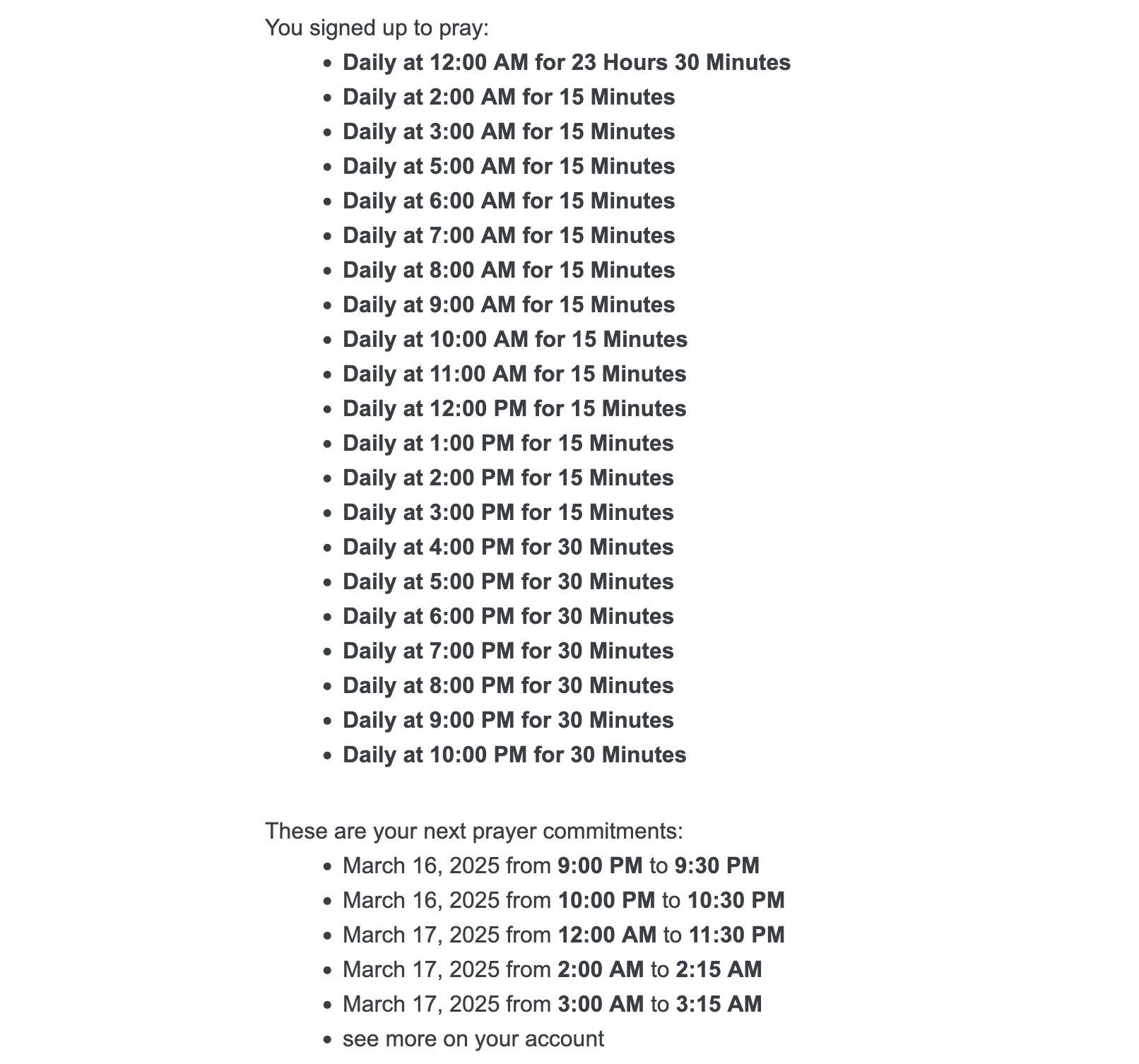
People post way too much of their personal information online—their fault, not mine—but luckily, through the patriarch, I was introduced to a campaign called Pray4Turkmen last year. This global Christian prayer initiative takes place once a year during Ramadan, when Christians pray that Muslims, weakened by hunger, will find the strength to convert to Christianity. On their website, you can register for times of day, in ten-minute intervals, to pray. I signed up to pray as many times as the website would allow—over eight hundred times over the course of Ramadan—that the Turkmen's souls would be saved by Jesus.
With a new taste for the spiritual, I began searching for other outlets for my religious faith and found Horizons International and its sister organization, Hope of the Nations Center in Beirut, Lebanon. Together, these organizations travel to refugee camps to preach the gospel to those in need. They claim great success in converting Muslims: hundreds have heard the gospel, and more than sixty have professed their faith in Jesus Christ. To aid this process, Horizons International developed its flagship course, Engage Muslims with Christ, to teach you the most effective methods. Missionary work involves more than approaching individuals during vulnerable moments; beliefs are often deeply rooted, and understanding a person’s worldview is important for communicating effectively and influencing them. Georges Houssney, director of Engage Muslims, believes that Christians are often intimidated by Muslims and hampered in this work by fear and anger. By educating Christians about Islam, he believes it's easier to reach Muslims where they are. Houssney says, "to accept Muslims as they are may well be the most unloving thing you could do." I signed up for only $95 online, through Rocky Mountain College of Canada.
In the course's interactive discussion portal, we were asked to engage with each other about the material and our personal relationship to it. Under a pseudonym, I wrote a small bio to introduce myself to the rest of my classmates:
Hello,
I was drawn to this course after a spiritual experience last Ramadan where I prayed over 800 times to convert the Turkmen to Christianity. I have already started approaching individuals I believe may be Muslim on the street, with limited success. I am eager to gain the skills I need to rid my brothers and sisters of their Satanic beliefs.
Other introductions were equally warm and welcoming, and my classmates seemed to come from similar backgrounds. Rebecca B. wrote:
Hello I am Rebecca! My family and I just returned from missions in Burundi Africa and also a visit in Saudi Arabia. It has ignited mine and my families desire to love the Muslims with more of a passion like Christ does…
Chris C. wrote:
My wife and I are nurses and hoping to find placement as workers in the middle east region. We want to understand our global neighbors better and glorify God from Montana onwards. Grace and peace to all.
Unlike me, few participants had firsthand exposure to Muslims. Tiffany L., for example, writes, “I don't personally know any Muslims.” Among those who had met a Muslim before, many were reluctant to approach them and held reservations about missionary work. Chris from Colorado wrote:
All I knew about missions at the time were the Crusades. From what I knew about the Crusades, I didn't want to engage with people in the United States and abroad because of the idea of 'convert or die by the sword.' I wanted to build relationships and do life with people. It's been several years since then, and my view of missions has changed dramatically...I am hoping that what I learn from this course will help open doors and opportunities to guide me to places the Lord wants me to go while learning about beliefs and practices about a group of people I know very little about but want to love well.
Professor Houssney teaches the course with his two equally handsome sons and has written several nonfiction books, including Conspiracy of the Nations. The book is quoted regularly in our course material, although I can't find any record of it. He writes, "God is at war. Satan is the obvious enemy. How he works is not as obvious to many. False religion, cults, idolatry, and deception are some of the obvious strategies of Satan. One of the most destructive strategies that is more sly and less conspicuous is the conspiracy of the nations." Houssney's faith is both religious and geopolitical; he believes that Muslims need Christ because Christ is the means by which all nations will be reconciled to God.
In the course, I learned that, unlike Christianity, Islam is not a religion of faith, but one of obligation. The Five Pillars, the six core beliefs, Sharia law, and the Qur’an all testify to Islam's works-based nature.
Consider your relationship with your family. Relationships like these are founded on love, trust, and mutual respect. You would do anything for your children or parents because you love them so deeply, even when they upset you. This is similar to a Christian's love of God. Compare that with a Muslim's relationship with God, which more closely resembles your relationship to the government. You may respect police officers, tax officials, and IRS agents out of a sense of duty, but there is no bond that unites you.
Islam's faith is one of obligation. They are obliged to be Muslim by birth, family, marriage, pressure from religious and political leaders, business and economic factors, geographical location, and anti-Christian spiritual forces. To affirm this religion, Muslims must perform rituals and prescribed practices regardless of personal beliefs or questions. Even love is not a part of God’s nature in Islam. This results from believing that God has no plurality within His nature. In Islam, God is a monad, solitary in His existence and nature. In such a state, it is impossible to love or be loved. It is because of this belief and the various descriptions of God in the Qur’an, Hadith, and other Islamic literature that many Muslims become secret agnostics or atheists.
But how do you actually engage Muslims? It's easy these days, Houssney says, because they are in our neighborhoods, schools, and workplaces. God gives us opportunities every day.
First, ask questions to show interest, but be careful not to interrogate them. Simple questions can be things like "Have you ever had a dream of Jesus?" or something more casual, like "Do you have nightmares of hell?" Listen genuinely before you speak and address them with a prayerful attitude. Remember you are developing a relationship, not just trying to prove a point. A good next step would be to invite them into your home and pray with them, and for them, in private, with their permission.
Once they are in your home, you can begin to introduce scripture. Read the Bible with them, and don't just quote it; put it in their hands and let them read it. But don't be too pushy. "Tease them with it... Let them ask for a copy." Don't invite Muslims to church until they are ready. Home groups are always better because culture shock may turn them away. When answering difficult questions, don't panic. In your heart, pray and ask God for help. If you don't know an answer, change the topic if necessary, or "just ignore the question and say what you want to say".
Beyond refugee camps and the home, I learned from my classmates that there are other funnels for conversion. Jason C. from my cohort works with international students at New York University. These students are typically in the United States for only a short time and, without the guidance of Jason's organization, would not ordinarily be invited into the hearths of American homes. There are other, more traditional approaches, too. Nick and Georgia from New Zealand have been married for almost two years. Nick's recent trip to Iraqi Kurdistan sparked a passion for Muslims that led him to become involved in a ministry in Auckland over the last six months.
If you do succeed at converting a Muslim, your work has not yet ended. Sometimes Christian missionaries see Muslim converts as “trophies” and put them on a pedestal. They neglect to adequately disciple them, and this can have disastrous consequences for these Muslim-background believers. These converts can begin to show excessive pride as a result of their celebrity status and are often given too much responsibility too early. Houssney says this can lead to sins of pride and greed, and that "extortion, divisiveness, and deception may result." In the worst cases, Muslim-background believers who are put on a pedestal can become disillusioned and return to Islam.
Most upsetting of all, after watching twenty hours of video modules, I clicked the finish button on the last slide and nothing happened. I didn't even get a certificate. I reached out to the Houssney family via email for help resolving this issue, but I have yet to hear back.
This is the second installment in my series on Assyrians and Christianity in the Middle East. Part one is available here.