The World's Tallest Towers
In Guangzhou, China, after Brittany had left, Dani and I spent a beautiful, quiet evening walking along the balmy waterfront, gazing at the Canton Tower. This tower is very tall and takes several iPhone photographs to capture its full height from up close.
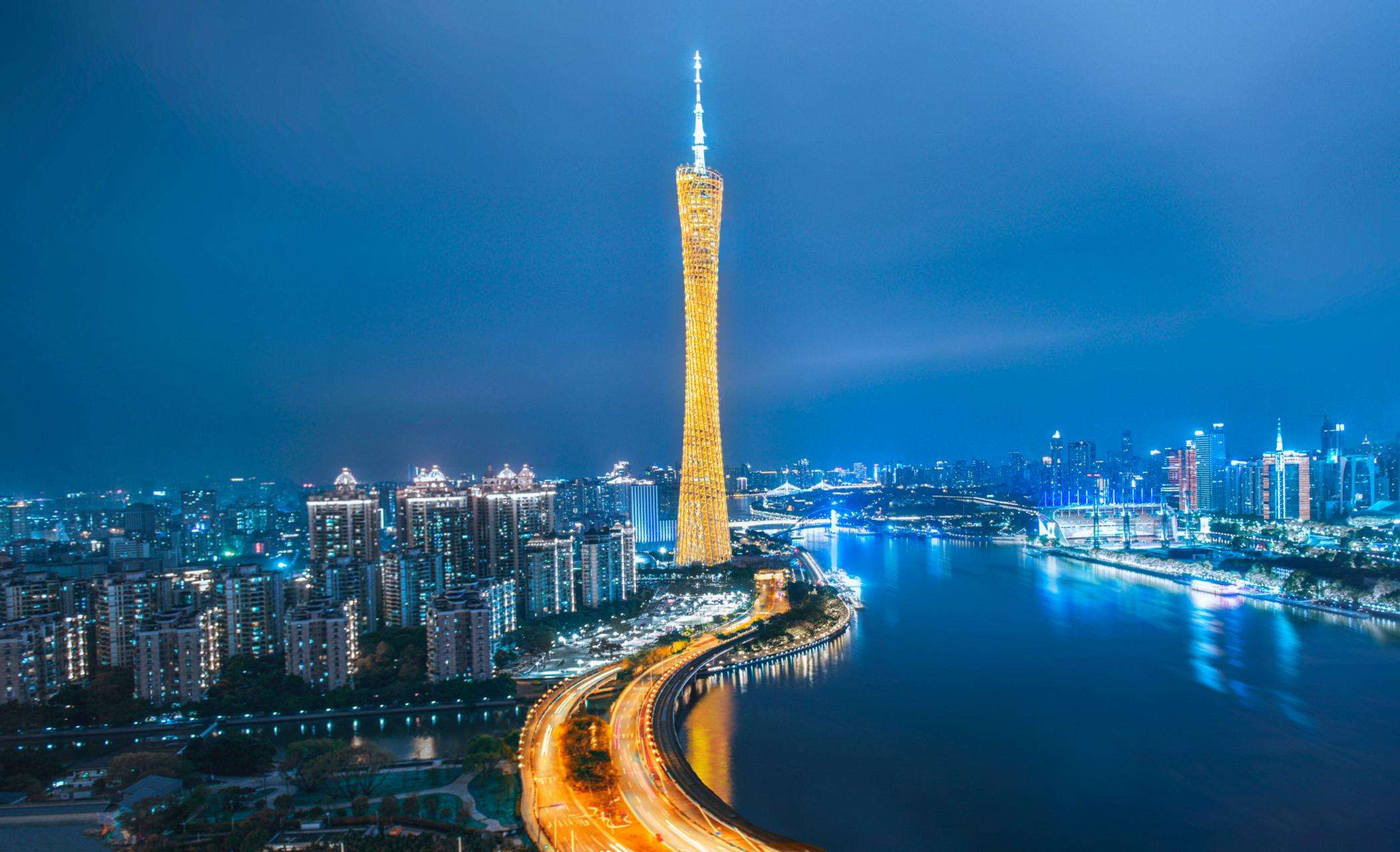
On the Canton Tower's Wikipedia page, it is listed as the second-tallest tower in the world and the fifth-largest freestanding structure. At 600 meters tall, it's twice the height of the Eiffel Tower and 50 meters taller than One World Trade Center (1,776 feet). I was confused when I typed in "tallest buildings in the world" later that night upon getting back to the hotel, and saw the Canton Tower nowhere on the list.
As the good American I am, I'm always suspicious of Chinese duplicity, and my initial reaction was that the Chinese Government had manipulated the Wikipedia page in some way for its own benefit, to make the Canton Tower seem grander than it was.
But, I learned the measurement of building heights is not arbitrary; height has long been a symbol of national and imperial prestige, and because of this, building heights are formally defined and maintained by the Council on Tall Buildings and Urban Habitat or CTBUH. The CTBUH keeps official records and ranks buildings using three criteria:
- Height to structural or architectural top;
- Height to the highest occupied floor;
- Height to the top of any part of the building.
The CTBUH tracks all measurable “structures,” but not all structures are considered buildings. A structure can include guyed masts, self-supporting towers, skyscrapers, oil platforms, transmission towers, and even bridge pylons. Broadcast masts alone make up a large share of the tallest structures on Earth.
Though the Canton Tower is enormously tall, it is categorized as a tower rather than a building, and thus it is ranked according to different criteria. The key distinction is that buildings must have at least 50% of their floor space occupied, while towers do not.
The Burj Khalifa has been the tallest building and tallest structure in the world since its completion in 2009. Its official height is 828 meters, but the highest usable floor is only 585 meters above the ground. This difference between a building’s pinnacle and its highest occupied floor is called its vanity height. Even without this unoccupied portion, the Burj would still be the tallest building in the world, though only by a narrow margin; its highest occupied floor is just 2 meters above the Shanghai Tower’s.
Until 1996, the world’s tallest building was defined by height to the top of the tallest architectural element, counting spires but not antennas. Spires are considered integral to a building’s design, while antennas are functional additions. In 1930, this technical distinction fueled the rivalry between the Bank of Manhattan Building and the Chrysler Building. The Bank of Manhattan Building stood 282.5 m tall and had a higher top-occupied floor but only a short spire. Meanwhile, the Chrysler Building secretly installed a 38.1 m spire within its own structure, allowing it to claim the record with a total height of 318.9 m, despite having a lower top-occupied floor and being shorter when both buildings' spires were ignored.
By some definitions, the Canton Tower may indeed be the 2nd-tallest, but when you include masts and broadcast structures, it ranks much lower, around 30th, surpassed by even the tallest structure in Louisiana.
Today, ninety-six buildings worldwide exceed 350 meters in height, and nearly half of these are in China. Staring up at the Canton Tower naturally invites reflections on progress, and it raises a question many Western visitors might ponder: why isn’t the United States more focused on building tall anymore? The world’s first skyscraper was built in Chicago in 1885, and eleven American buildings have held the title of world’s tallest. There are new proposals, like the Legends Tower in Oklahoma City, which if ever built, would be the sixth-tallest tower in the world. But these ideas are more dream than reality. As it stands, skyscrapers are not very cost-effective, and the United States has more pressing priorities.
The KRKD-TV mast is the tallest structure in the United States and the second-tallest in the Western Hemisphere. Here's a video of a brave soul climbing all 600m for its annual inspection. It has fallen over twice: once when several guy-wires were severed by a military helicopter, and again during an ice storm.
But a building does not have to extend the highest in order to be the tallest. Similar to the mountain Mauna Kea in Hawaii, which from the sea floor measures taller than Mount Everest, the Petronius, a deepwater tower oil platform located in the United States Exclusive Economic Zone, measures 640 meters high, but only 75 meters are above water. Here's a photograph of it being transported.

I asked Google how tall we could potentially build a skyscraper, and its AI said that theoretically, buildings could be built "at least as tall as 8,849 meters, one meter taller than Mount Everest." If such a building existed, the base of it, according to theoretical calculations made by the Google AI overview, would need to be about 4,100 square kilometers.
But theoretically, buildings could be even taller than that. Because buildings are lighter than solid earth – the Burj Khalifa, for example, is about 15 percent structure and 85 percent air – which means the tallest building could be 6.6667 times taller and weigh the same as that solid object. The AI goes on to explain, this means a building could be as tall as 59,000 meters without outweighing a mountain like Mount Everest and crushing the very earth below.