Throughout all the ages, there have been only four degrees in love:
The first consists in arousing hope;
The second in offering kisses;
The third in the enjoyment of intimate embraces;
The fourth in the abandonment of the entire person.
These aren’t the rules of some dilapidated club in the city where I live where everyone is obsessed with reinventing what it means to love, but lines from a medieval treatise written by Andreas Capellanus, born in 1150, called De Amore. In it, he writes: "marriage is no real excuse for not loving", "he who is not jealous can not love", and "a true lover is constantly and without intermission possessed by the thought of his beloved." I spent some hours perusing the book a few weeks back while sitting in bed eating a delicious pasta bolognese. Every generation likes to act like they invented sex, but lately everyone around me in Berlin seems keen on trying out new techniques from polyamory to ethical non-monogamy, conscious coupling, casual uncoupling, and everything in between. But is this freedom all it's cracked up to be?
I asked my friends for their opinions on falling in love in Berlin, and got some extremely funny answers that I won't share, because that's private, but on Reddit, I found disillusionment about the dating scene common. “Dating in Berlin is a depressing shit show,” writes one user. “Totally ruined my self-worth back in the day.” Another complains, “Berlin is a city full of Peter Pans who never grow up and take responsibility.” “Most treat the city like a big amusement park,” adds a third. “It's basically just an unending stream of hookups and FWBs as no one wants a relationship.” Some suggest that the best way to find a long-term partner is to leave town.
Just like waking up to a stranger after a night of sweaty bliss, when fun dissolves into daylight, the obvious temptation is to retreat to back to traditional values. But that’s no easy fix. Arthur Schopenhauer, lover of Berlin nightlife, says that "to be rid of the challenge of courtship would drive people to suicide with boredom." I, happily, and not so recently married, try to give my friends as much advice on this topic as I possibly can so they can avoid the mistakes I have made: I warn them that two blondes can never date, that the sexiest form of communication is email, and that what our liberation takes off the table is the essential component of a real love affair, which is that desire should never make itself obvious. Is it possible that with all this new love, we've forgotten that Andreas Capellanus already figured out how to correctly fall in love a thousand years ago?
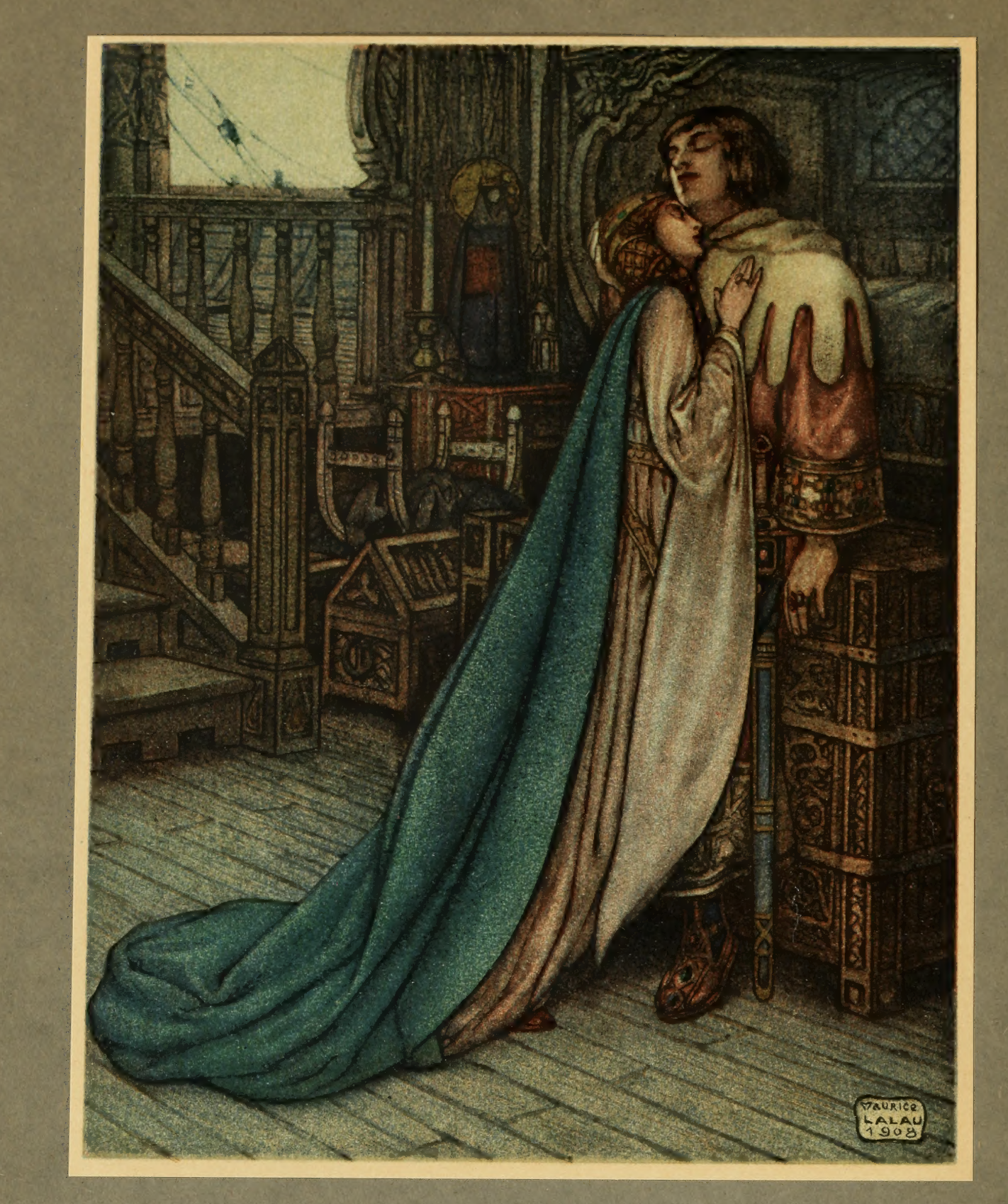
The prevalence of arranged marriages in the medieval period, around the time of the First Crusade (1099 AD) necessitated alternative outlets for expressing romantic love. The sensational popularity of Chrétien de Troyes's poem Lancelot, the Knight of the Cart, about the secret adulterous love affair between the knight Lancelot and his queen Guinevere, marked the birth of a new literary conception of love known as amour courtois or courtly love, something "at once illicit and morally elevating, passionate and disciplined, humiliating and exalting, human and transcendent." These tales usually revolved around married women of high noble rank, and a knight of inferior birth trying to win her love. Romantic poets known as troubadours traveled the high courts of France, telling variations of these love stories and they began to follow a specific structure, known as a "game of love", and developed, like all human things, from poetry into a set of social practices as follows:
- Attraction to the lady, usually via eyes/glance
- Worship of the lady from afar
- Declaration of passionate devotion
- Virtuous rejection by the lady
- Renewed wooing with oaths of virtue and eternal fealty
- Moans of approaching death from unsatisfied desire
- Heroic deeds of valor which win the lady heard
- Consummation of the secret love
- Endless adventures and subterfuges avoiding detection.
This private love was ennobling for the lovers, the more secret and difficult to obtain the love was, the more ennobling, and it served as a means for inspiring one to great deeds. "The easy attainment of love makes it of little value; difficulty of attainment makes it prized," writes Andreas Capellanus. Frank Tallis argues that love does not require liking and that "love that may even thrive in response to rejection or contempt.... Some situational uncertainty is required for the intense mental preoccupation to occur."
All courtly love was erotic to some degree; some claim it was adulterous sexual love, with physical consummation with the Lady as the desired end, others that romantic love served as a metaphorical and poetic symbol of our affection for God. In the poem Lancelot, our hero rejects the sexual advances of willing damsels because of his secret love for Queen Guinevere. When Guinevere finally sneaks Lancelot up to her room, he cuts his finger climbing in her window, and bleeds on her bed.
In Boccaccio's The Decameron, women deceive their husbands for sex by hiding in trunks or swapping places in beds. A pirate abducts a young wife. Rather than returning home, she chooses to stay with her captor because he is better in the sack. A young man pretends to be mute so he can work in a convent. The nuns, believing he cannot speak, begin sleeping with him in secret. Eventually, nearly all the nuns take a turn with him. A devout girl goes to the desert to serve God. A fake hermit tells her that the best way to "put the Devil back in Hell" is through sex. She eagerly complies.
In Dante's Divine Comedy, Dante experiences only brief real-life encounters with his object of love, Beatrice, and they never consummate their love. In death, she becomes his eternal muse, a symbol of spiritual love that guides him through the afterlife and represents divine love itself. The question at the heart of the Middle Ages remains unanswered as to what the living poet should do: physically consummate, like Lancelot, or live a life of perpetual desire, channeling his energies to higher ends, like Dante. "Scholars have seen it both ways."
Throughout the 19th century, it was debated whether passion, love, and companionship could serve as a basis for marriage. Capellanus argued that "love can have no place between husband and wife," although they may feel "immoderate affection". In the novel Anna Karenina, Levin, after marriage to the woman he believed was the love of his life, discovers marriage to be another mirage of his fantasy and, “happy in his family life, a healthy man, Levin was several times so close to suicide that he hid a rope lest he hang himself.” Similarly, almost as soon as lovers Anna and Vronsky run away together, Vronsky who once begged “for the right to hope, to be tormented, as I am now”, becomes restless for the life he used to lead. On the eve of her suicide, Anna conceives that we all live alone in our narcissism when she says: "Aren't we all thrown into the world only to hate each other and so to torment ourselves and others?" In death, she makes her choice on the nature of love, but leaves behind the rest of us to continue to live on in the theatre of courtly love.
In Pride and Prejudice, Austen asks if the negotiating process of obtaining marriage can be a form of courtly love. Elizabeth refuses an engagement to Mr. Collins that would have saved the family farm, just because he had a weird vibe. In the end, Elizabeth gets both a declaration of love and financial security; in return, Mr. Darcy gets a wife who validates his moral growth. The erotic here is no longer explicit, but every girl alive who loves yelling at their ugly boyfriend knows it's there, in the negotiation. In Austen, God was no woman, but success in the economic sphere may be interpreted as a reflection of God’s blessing.
The debate about love and marriage did not end in the 19th Century, but unfortunately, we no longer have great poems or novels to guide us, just Instagram Reels. But that hasn't prevented the poetic "game of love" from metastasizing. Slavoj Žižek writes, "The impression that courtly love is out of date, long superseded by modern manners, is a lure blinding us to how the logic of courtly love still defines the parameters within which the two sexes relate to each other." Today, we still have nobility, troubadours, and knights who joust for their lovers; they look a little different.
In the 12th-century story of Tristan and Isolde, lovers Isolde and Tristan were friends from childhood. Isolde was betrothed to a rich man. Knowing Isolde would find a loveless marriage constricting, her aunt prepared a love potion for her and the king to drink together. On the journey to her wedding, Tristan, now a knight, and Isolde accidentally drink the wine together. "It was not wine, it was passion, and bitter joy, and anguish without end, and death... At this moment, Bragwaine entered and saw how they gazed at each other in silence, ravished and amazed." For their living days, Isolde's heart, without Tristan, was "sore with this tenderness which was more painful than hate." When Tristan is mortally wounded, he sends for Isolde, knowing only she could heal him. Tristan's jealous wife lies pretending that Isolde refused to come. Heartbroken, Tristan dies. When Isolde reaches him and finds him dead, Isolde dies of grief.
This all-consuming, almost tragic love is not just the stuff of medieval legend. Actress Jada Pinkett Smith, in her memoir Worthy, recounts a similar love. Growing up in a rough neighborhood in Baltimore, the daughter of two heroin addicts, Jada met Tupac Shakur at the Baltimore School of the Arts. At first, she thought he was “kind of funny looking,” but she was immediately drawn to him.
As soon as he approached me, he was like a magnet. Once you paid attention to him he kind of sucked you in. And we hit it off from that moment on … I don’t think either one of us thought we would have made it in the way that we did, but we knew we were gonna do something.
The two were inseparable, like brother and sister, but there was also something more. They exchanged love poems. To Jada, Tupac wrote, "u Bring me 2 climax without sex and u do it all with regal grace". They stayed close as they both found fame in their respective fields. They understood where the other came from. “It was almost like God made us that way,” Pinkett Smith recalled. “It was like, look, I’m going to put y’all together, right? Y’all are going to be a dynamic duo. But I’m going to tell you right now, I’m going to make it so y’all are not going to be able to get together ‘cause that just wasn’t the purpose.”
After a few close calls in her late teens, she moved to Los Angeles, where she started acting and orbiting around Will Smith, who, after a fairly middle-class upbringing, had just launched into megastardom with The Fresh Prince of Bel-Air. Jada and Will were introduced by a mutual friend in the early 1990s. Smith wanted her to play his girlfriend on The Fresh Prince, but Jada declined, weary of the generous but restricting contracts offered to TV stars at the time. The two crossed paths occasionally, but Jada kept her distance while Will was still married to his first wife.
Jada never let her friendship with Tupac fade, and despite their platonic relationship, the pair continued to exchange letters. While Tupac was in prison at Rikers Island, he proposed marriage:
Now as I slip from grace and the world has turned against me, a few claim to have love for me, but once again you show your love. After deep reflection and spiritual awakening I have come to realize the friend, love, and soulmate was there all the time. I have not seen or felt from anywhere anyone the intensity and loyalty that you have shown me. That is why I want to commit myself to you. I want to marry you.
She turned down the proposal, but their friendship endured until a fight after his release. Pride kept her from calling him, and less than a year later, he was killed at age 25. “I really took for granted that he would be living forever,” Jada later said. “I looked at Pac as being invincible.”
Meanwhile, Will was wrestling with his own truth. One evening, in a restaurant bathroom while on a date with his wife, he found himself sobbing and laughing uncontrollably. “I had a realization I wasn’t with the person I was supposed to be with.” But, he vowed he would never divorce. Eventually, his wife filed for him, and soon after, Will phoned Jada: “Are you seeing anyone?” Her answer: “No.” His reply: “Cool, you’re seeing me now.”
Their wedding was far from a fairytale. “I was so upset that I had to have a wedding,” Jada confessed. “I was so pissed. I went crying down the freakin’ aisle getting married... I think we were both still stuck in our fantasy of what we thought the other person should be.”
There are many similarities between Jada and Isolde's stories. Jada is a Lady of nobility, Tupac a tragic knight; their bond is intense, spiritual, and transformative, shaping them both even as it remains unfulfilled. The Lady marries a wealthy man (Will), the knight dies too young, immortalized in memory and myth, and the Lady grieves as long as she lives.
There is one crucial difference. Jada is not only the Lady of this story, she is also its troubadour. You may have heard all of this before, because she tells her story again and again, reanimating the tale for the public, so much so that critics online even joke: “Tupac isn’t dead; he’s just hiding from Jada.”
Today, it is not the love itself that elevates Jada, but the story she tells about that love. Historian Christopher Lasch describes this blurring of public and private life as a narcissistic psychological survival defense against loss of control in modern life. This can be viewed two ways: either Jada is aware that her narrative is a performance of tried and true archetypes, proving that the myth of love remains a dazzling spectacle even in our media-saturated age, or her storytelling is a searching attempt at authenticity, a way to find meaning in a culture that often confuses self-disclosure with sincerity, substituting the raw passion of love with self-love. Luckily for us, Žižek writes, "there is more truth in the mask we wear, in the game we play, in the ‘fiction’ we obey and follow, than in what is concealed beneath the mask."
Online, many suggest Jada’s podcast Red Table Talk is just an elaborate way to shame Will. In the episode “How Your Relationship Can Survive Quarantine,” she admitted, “I have to be honest. I think one of the things that I’ve realized is that I don’t know Will at all... You get into all these ideas of what marriages are supposed to be.”
Unlike Tupac, Will’s love was practical, focused on providing security. He bought flowers and gave her children. In Jada’s words, “Will’s love language was, ‘I want to work hard so you can have everything you could ever want. You won’t need for anything.’ Mine was, ‘I want you to be here with me. I don’t need all that stuff. I want to look in your eyes and feel your love and protection.’”
Divorce rumors were never far away, but Jada defended their relationship: “I’ve always told Will, ‘You can do whatever you want as long as you can look at yourself in the mirror and be okay.’ At the end of the day, Will is his own man. I’m his partner, but he has to decide who he wants to be. Or vice versa.” She clarified later, “Will and I BOTH can do WHATEVER we want, because we TRUST each other to do so. This does NOT mean we have an open relationship. This means we have a grown one.” Yet, freedom brought little comfort.
By the 2022 Academy Awards, Will and Jada were separated, living apart, but remained committed as family and business partners. But that night would forever redefine public perception. Will, nominated for Best Actor, laughed at a joke made at Jada’s expense. She rolled her eyes. The camera cut away, and seconds later, Will walked on stage and slapped Chris Rock. What passed between Will and Jada in those brief seconds while the camera looked away, we will never know for sure, but perhaps it holds a clue to the secret of love.
To me, it is obvious. Will understands the game of love like the rest of us, and that night, he shed the role of Jada's husband and king and embraced, instead, the archetype of the heroic knight, performing a public gesture of devotion. On stage, through tears he said, “I’m being called on in my life to love people and to protect people... love will make you do crazy things.” But did he truly protect her? Jada’s answer was complex: “I would say yes and no. I think it was in his way, but it was so much more. It wasn’t about me, that’s why it’s complex.”
Žižek argues that courtly love does not represent a metaphysical good, but rather, evil, a sense of perversion around which the subject's desire for his lady is actually the desire for an empty Object or subsuming ’black hole’ in which proceeding straight on ensures the lover miss its target. Horrifying as it may be, the lady exists “not as she is, but as she fills his dream.” Žižek writes, "What the paradox of the Lady in courtly love ultimately amounts to is thus the paradox of detour: our 'official' desire is that we want to sleep with the Lady, whereas in truth, there is nothing we fear more than a Lady who might generously yield to this wish of ours."
In a 2015 essay by author Elizabeth Gilbert of Eat Pray Love fame called Confessions of a Seduction Addict, Gilbert writes, “I can’t say that I was always looking for a better man... I often traded good men for bad ones; character didn’t much matter to me. I wasn’t exactly seeking love, either… Sex was just the gateway drug for me, a portal to the much higher high I was really after, which was seduction.”
Seduction, for Gilbert, is an art of domination: “the art of coercing somebody to desire you, of orchestrating somebody else’s longings to suit your own hungry agenda.” It was “never a casual sport… but a heist, adrenalizing and urgent.” She would “break into his deepest vault, steal all his emotional currency and spend it on myself.”
“If the man was already involved,” she continues, “I knew that I didn’t need to be prettier or better… I just needed to be different.” The goal was to become “a sparkling alternative to his regular life,” to transform herself into the opposite of the woman he already loved. And when the man’s gaze began to shift, from indifference, to friendship, to open desire, “that’s what I was after: the telekinesis-like sensation of steadily dragging somebody’s fullest attention toward me and only me. That was power, but it was also a form of affirmation. I was someone’s irresistible treasure… I needed it, not sometimes, not even often, but always.”
Her most recent memoir, titled All the Way to the River: Love, Loss, and Liberation, details her relationship with Rayya Elias, a queer hairdresser whom she met and fell in love with during her first marriage. After the release of Eat, Pray, Love, a book about her divorce from her first husband and her string of succeeding boyfriends, she settled down with her second husband, José Nunes, whom she met in Bali. By 2016, she announced they were separating because she was in a relationship with Elias, played by Viola Davis in the film version starring Julia Roberts. The new memoir was panned in a variety of outlets, including a New York Magazine review by Jia Tolentino (what's up with those unresolved human trafficking allegations, btw?). Online commentators slammed Gilbert for “telling us how to live and create when she so clearly doesn’t have a clue.”
In All the Way to the River, Gilbert reveals the pair were best friends for many years, and by 2013, Tolentino writes, "Gilbert is admitting to a stranger in a book-signing line that the only reason she and Rayya aren’t a couple is that Gilbert is married and 'trying to be good.'" Three years later, Elias is diagnosed with pancreatic cancer and given six months to live. The night of her diagnosis, Gilbert professes her love, and they begin an intensely passionate love affair. “We were ecstatic, phosphorescent, dangerous, brilliant, and full of wild courage,” Gilbert writes. “We were writing poems about each other, staying awake just to watch ourselves breathing, and pouring words of devotion back and forth.” What happens next, I'll spare you all the horrifying details, but Elias, a recovering addict, quickly and tremendously relapses with the help of Gilbert. Gilbert conceives that the only way out of their situation is for her to murder Elias – this is a self-help book, mind you. She decides against the murder last minute and they eventually break up. Elias gets sober with the help of other friends, and passes away a few months later surrounded by family, while Gilbert receives professional help for her sex and love addiction.
Online, commenters say, "I got the impression that Rayya’s diagnosis is what made Rayya so appealing to Gilbert. Sure, there may have been a crush earlier, but the fact is that Gilbert can’t commit to anybody for longer than the infatuation stage. Falling madly in love with a dying person was the only way she could commit to somebody until death do us part, while always remembering it as a grand love story (as opposed to a false love story, to be corrected by cheating)."
But, as Gilbert suggests, we should look through the horror of her story to find our own reflection. There’s been much discussion about the trickle-down effect of Gilbert’s prose on the legion of twenty- and thirty-something women who have learned (via Instagram captions) to turn the agonies of their love lives into quests for self-realization. Gilbert’s world is more complicated than the rest of ours: her self-realization generates fame, which in turn fuels a perpetual cycle of new love and new confession. She is, in a way, Jada Pinkett Smith trapped in a vortex, an unreality that somehow feels more vivid, and more terrifying, than the lives of the rest of us trying to perform our own romances for respect.
Many admirers emulate Gilbert’s style, chasing the glamour and drama of her erotic quests, yet few dare venture near that edge, which chases ecstatic pleasure beyond the bounds of the symbolic order. It is excessive, unspeakable, and beyond measurement, a kind of overflowing pleasure that cannot be fully integrated into the subject’s ego or social norms. Her thrill comes not from fulfillment, but from the tension between what she wants, what she's supposed to want, and what she can never completely have. In other words, Gilbert takes the structure of courtly love to its logical extreme: if romantic love is “good,” then she should annihilate the self through noble rapture, breaking through the limits of life itself—to see God, like Dante. We can thank her for taking the theory of love to its logical limit for us, so we don't have to. Going deeper into the black hole of desire will never bring anyone closer to truth because the essential paradox of love is: we want it to liberate us, but it’s really only fun when we are breaking the rules.