This is the third installment of my series about a proposed new city development in Northern California. You don't need to read the other two; I'll catch you up to speed. Founder Devon Zuegel of the Esmeralda Land Company and I went to high school together. She had an ugly boyfriend.
When I started my blog, I looked at hers for reference about what women in tech should write about. Her content was varied. Sometimes she wrote about the benefits unregulated stem cell research, other times she promoted the development of new special economic zones in South America, described by Elizabeth Warren as "neocolonial", and sometimes she just talked about how much she loved Miami. Then, like all millennials in their thirties, she became intoxicated by walkable cities and decided to build her own town.
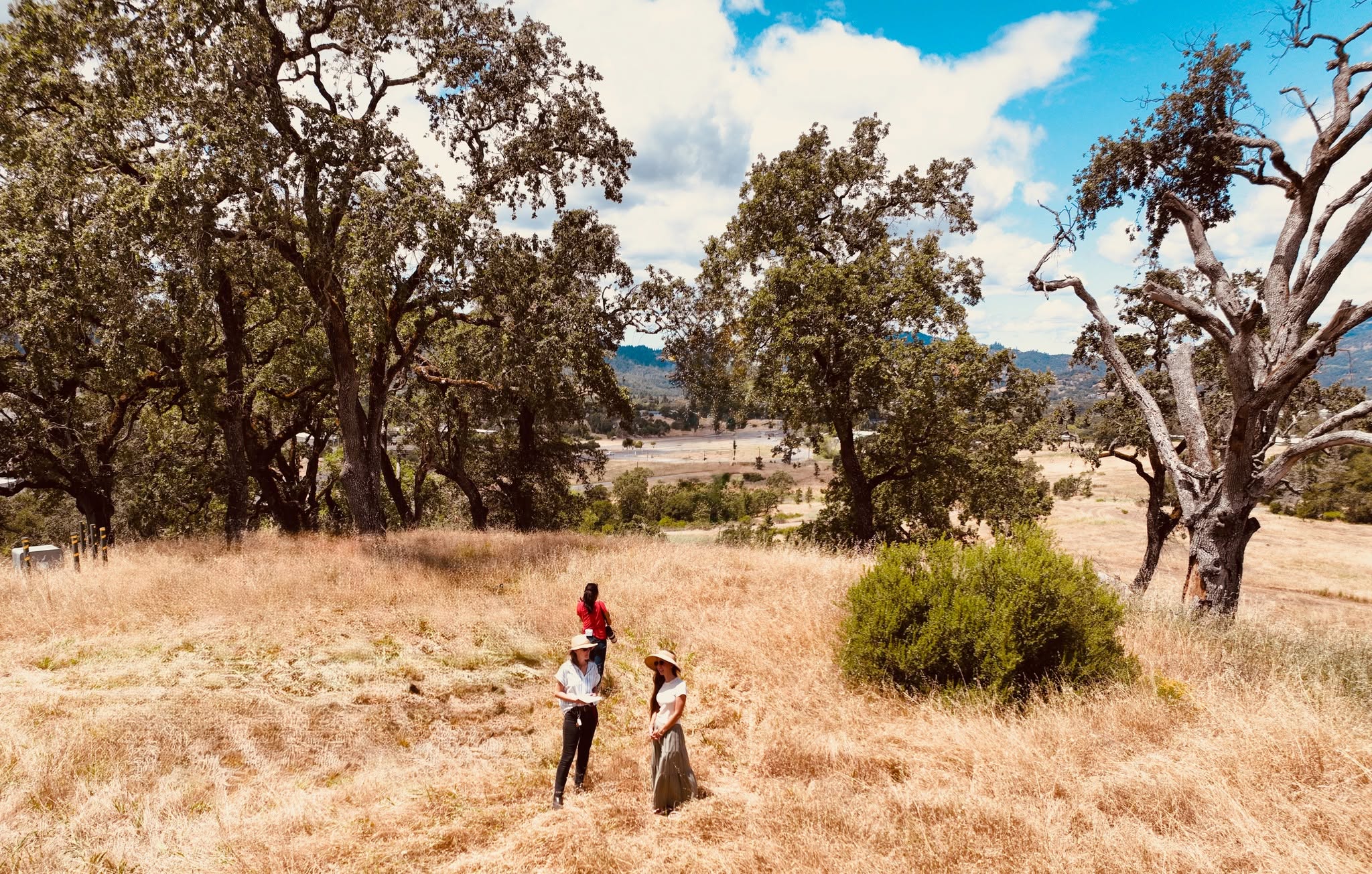
I'd forgotten about Zuegel because I'm not like her anymore; I'm European now. But a few weeks ago, a resident of Cloverdale, California, emailed me through my blog about Esmeralda Land Company, and I decided to check back in with her. Zuegel's company had been conducting due diligence on a 261-acre plot of land adjacent to Cloverdale, a sleepy Northern California hamlet just outside of the Silicon Valley commuter vortex. The property is technically within city limits, just on the other side of the freeway, and from the comments on her recent YouTube videos and podcast appearances, opinions are divided.
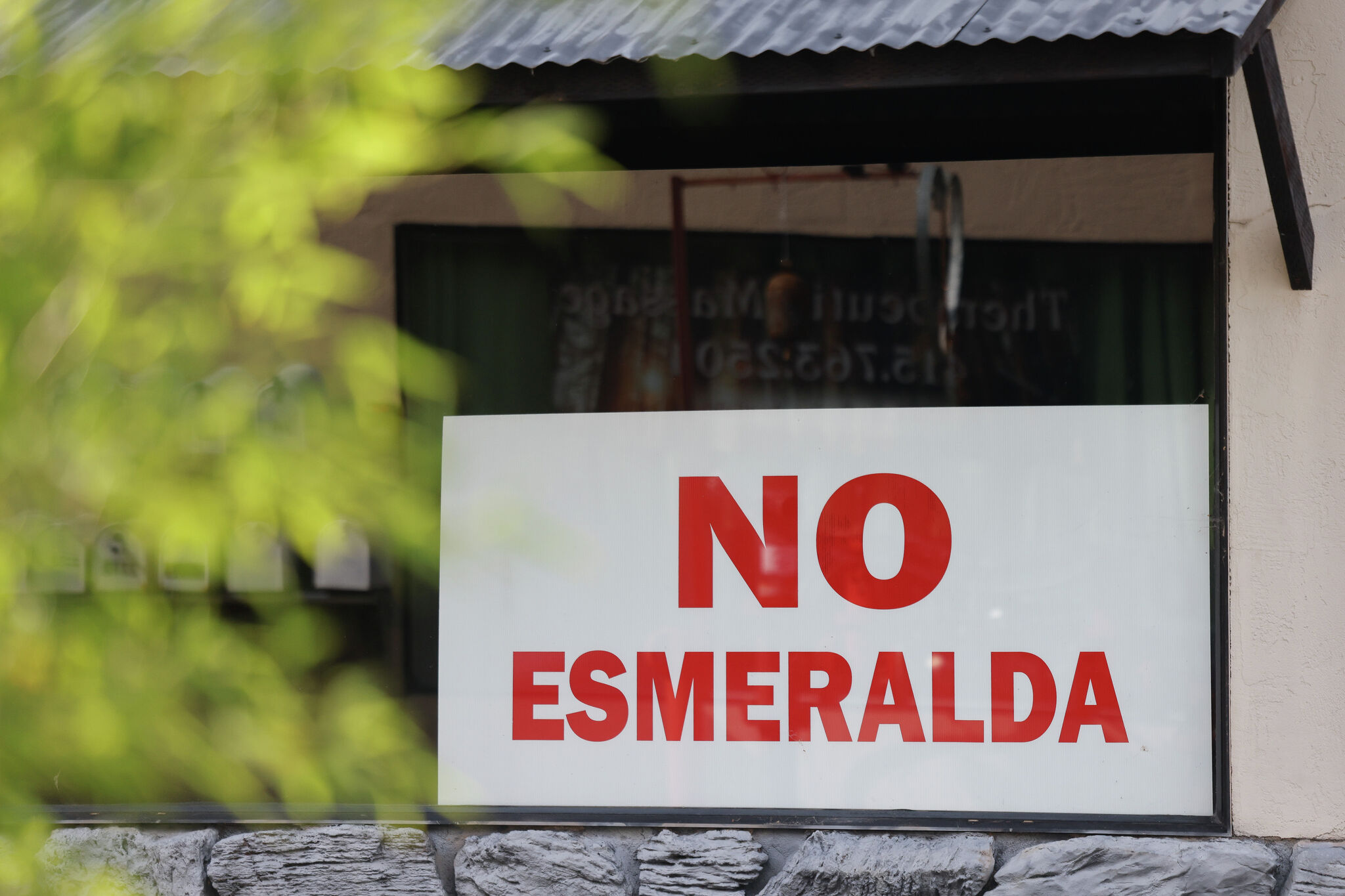
I listened to a five-hour Cloverdale City Council meeting about the proposal a few weeks back on an unremarkable weekday night while building a cat wheel for Artie. Previously, the land was the site of a former lumber mill, which contained documented contamination in both the soil and groundwater. Cloverdale residents are petitioning for an updated environmental review to address the risk of toxic chemicals reaching the nearby Russian River during redevelopment. Some remain unconvinced cleanup has made the land safe for those downstream; the towns of Geyserville and Healdsburg both depend on the Russian River for drinking water.
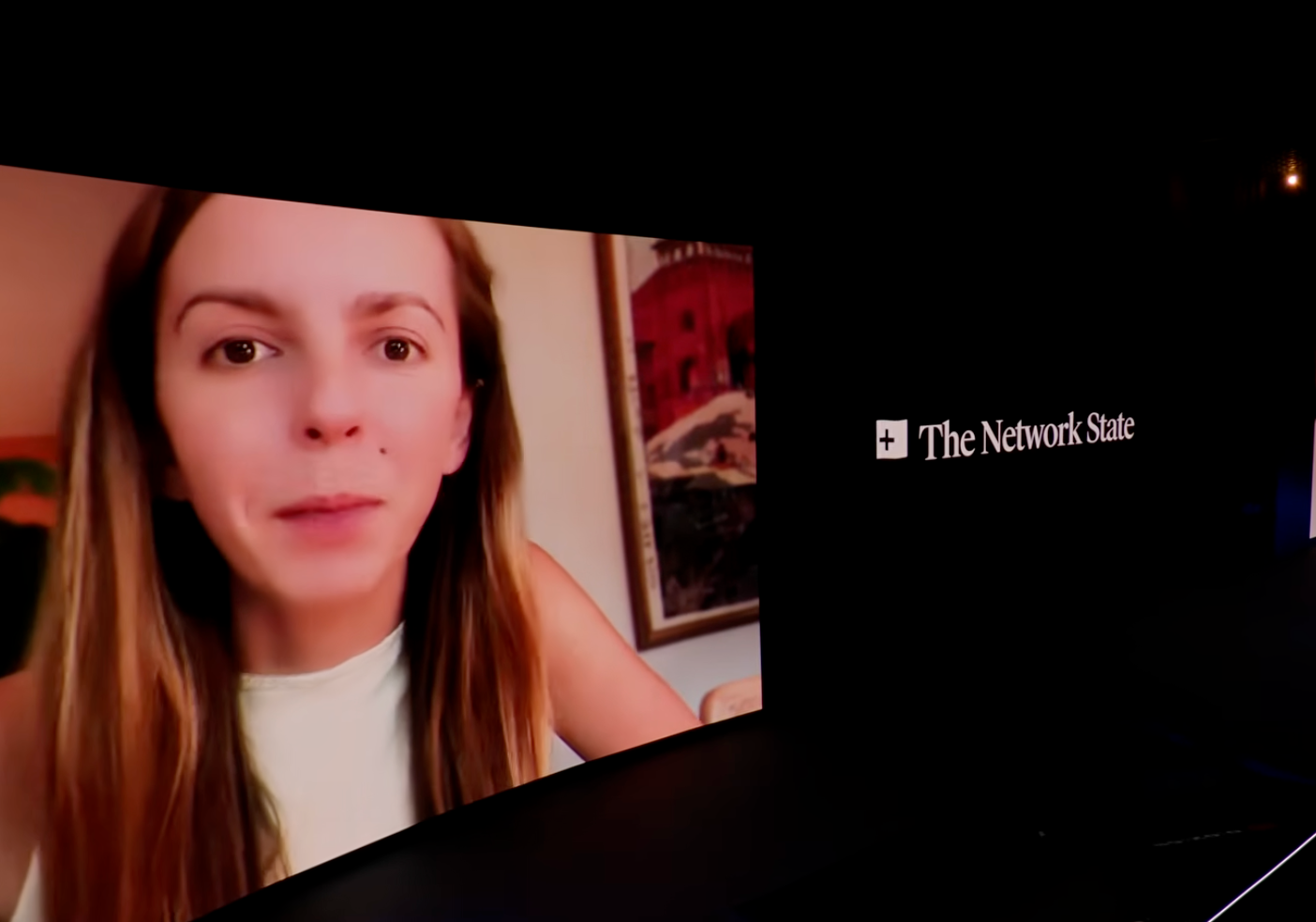
They are also concerned about the ideological beliefs of future Esmeraldans. Zuegel's work has been closely linked with the concept of the Network State, an idea promoted by millionaire investor Balaji Srinivasan that people with shared values should first form online communities, then pool resources, establish physical communities, and eventually seek independent diplomatic sovereignty. Zuegel says that associating her new project with the controversial movement feeds into a conspiracy theory spread by a handful of misinformed people. Here she is speaking on the main stage at The Network State conference last year.
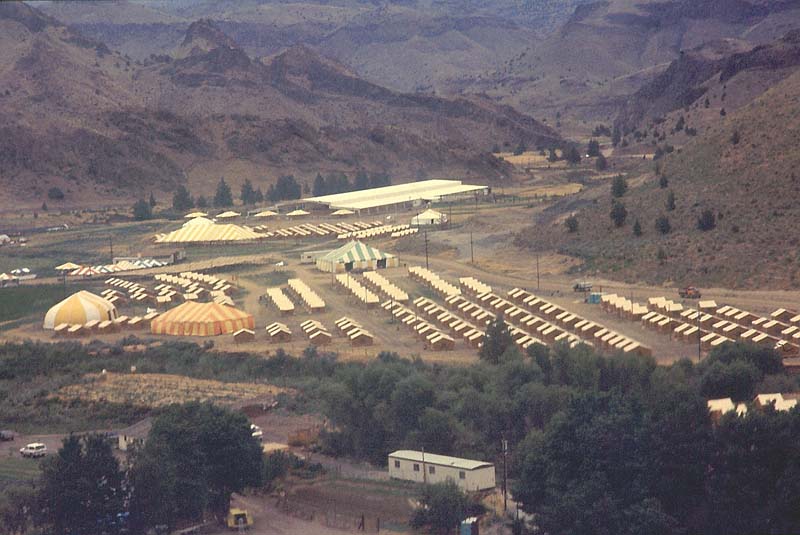
Others worry the land could turn into another version of the Bhagwan Cult, whose charismatic leader, Rajneesh, took over the neighboring town of Antelope, Oregon, in the 1980s. At its peak, the tent cities held 7,000 people, who caused all sorts of trouble. Rajneeshees started poisoning local salad bars, and a Rajneeshee-owned hotel was bombed by an Islamist militant group, for example. (People say, actually, Rajneesh had some good ideas, and he's amassed a renewed following in recent years.)
Esmeralda's proposed land itself carries some precedent. In 1881, the property was settled by a group of French utopian-socialist immigrants inspired by Robert Owen, called the Icarians, who began an experiment in cooperative living. Utopias are known to come in pairs. Marguerite Young’s Angel in the Forest, a book about Owen, tells the story of two attempts to build a utopian community in New Harmony, Indiana. In 1814, Father George Rapp, a German mystic, established a strict, celibate community there. The town did not grow, and a decade later, Owen bought it, hoping to create a community founded on a new kind of reason he'd developed. Young writes that “Father Rapp chose America first, not because he believed that God’s voice would speak out of the marsh more clearly than it had spoken out of the vineyards in Württemberg, but because the land was fierce and cheap.”
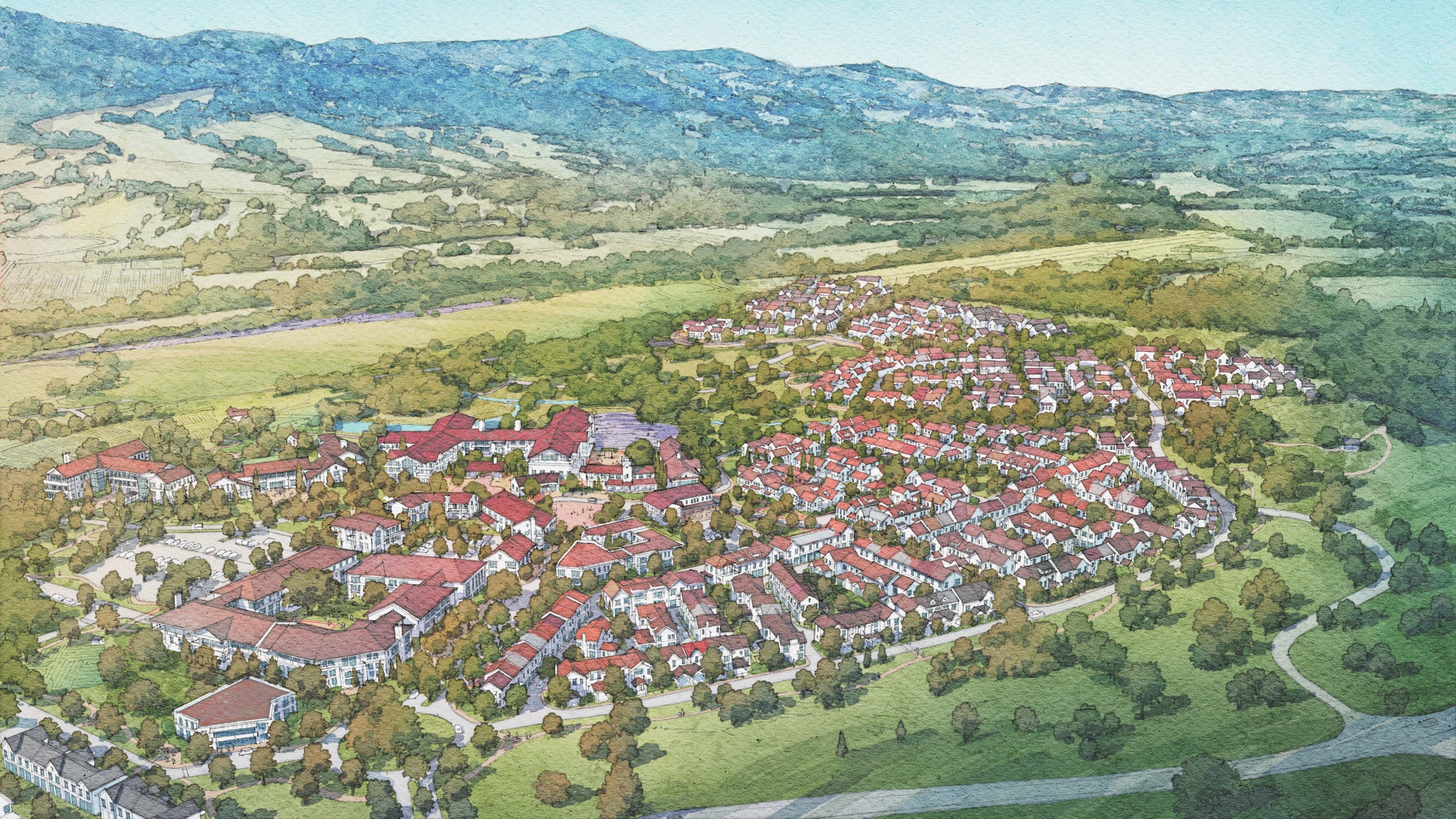
The land is no longer fierce or cheap, and the development of Esmeralda will be a long uphill battle—approximately 10 years by Esmeralda's estimate. Financing for the town is backed by nineteen unnamed financial backers, listed as “families and friends” (we're from the richest ZIP code in America). But, California is plagued now by complex zoning restrictions, that require delicate maneuvering to cut through red tape. In the 2010s, the property was approved for a hotel and resort complex called the Alexander Valley Resort, which included a 100–150-room hotel, standalone bungalows, a European-style spa, restaurants, housing units, shows, and an equestrian center. Esmeralda's proposal adopts much of Alexander Valley Resort's original plan, adding an additional 605 residential units. These will be market-rate properties, priced between two and four million dollars and predominantly used as second homes, according to Esmeralda.
Water will come from the city of Cloverdale, which is one of the incentives of incorporating within an existing city. Water rights and land rights are legally separate in California; buying land does not automatically secure the water you need to develop it. New water appropriations require an application, technical studies, environmental review, public notice, and the resolution of objections. Even then, permits are not guaranteed, and the process can take years. Esmeralda will require an estimated 76 million gallons a year from Cloverdale. "No Esmeraldans" argue this will put strain on the city because of PG&E’s planned removal of Scott and Cape Horn dams as part of the Potter Valley Project’s decommissioning, which will leave Cloverdale already vulnerable to drought.
Watching Zuegel competently command an audience for five hours, and speak convincingly about the project, reasonably answering every question even when the audience jeered, left me with no doubt that the project would be approved (as of November 11th, it was). Where we are from, we are all children of brilliant parents. It's agreed that this is a trait that is sometimes genetic. About 50% of us inherit the mojo, while the other half go on to disappoint. We all know which side I'm on. Zuegel and I had a design teacher in high school who knew nothing; her only qualification seemed to be that her dad had invented GPS. I think they kept her around hoping that spark of genius would make a reappearance. Someone else we grew up with invented a way to get Filipinos to double-check AI military data, and now she's the youngest lady-billionaire alive, richer than Kylie Jenner, lives in Miami, owns a pet lemur, and is occasionally on TMZ because her neighbors, the Beckhams, issue frequent noise complaints.
Even if I don't believe this new town will be as quaint as the photos make it seem, I could think of worse uses for a toxic waste dump just off the highway, and worse things for Zuegel to be focusing her attention on. Still, morally, is it possible that anything good could come out of the new community that emerges?
Esmeralda, Zuegel says, is inspired by a utopian project called Chautauqua, a summer retreat in upstate New York—an odd American hybrid: part college, part resort, part religious assembly, where people gather for ten weeks every year to talk ideas. Zuegel went to Chautauqua every summer as a kid. Her grandmother lived there, and together they sat on porches and had the pleasant experience of talking with people as they walked by. In sales pitches, Zuegel shows photos of herself sitting amongst a mass of children on a sunlit veranda.
Lately, as if transformed into that photo, she's ditched the Silicon Valley uniform and is seen in floor-length white dresses and sandals, tanned, with hair down to her waist, meeting to discuss ideas with the people in the land of perpetual summer. (I described her as beautiful to a friend—I can't remember who—who then made me pull up a close-up photo of her on my phone so she could disagree.)
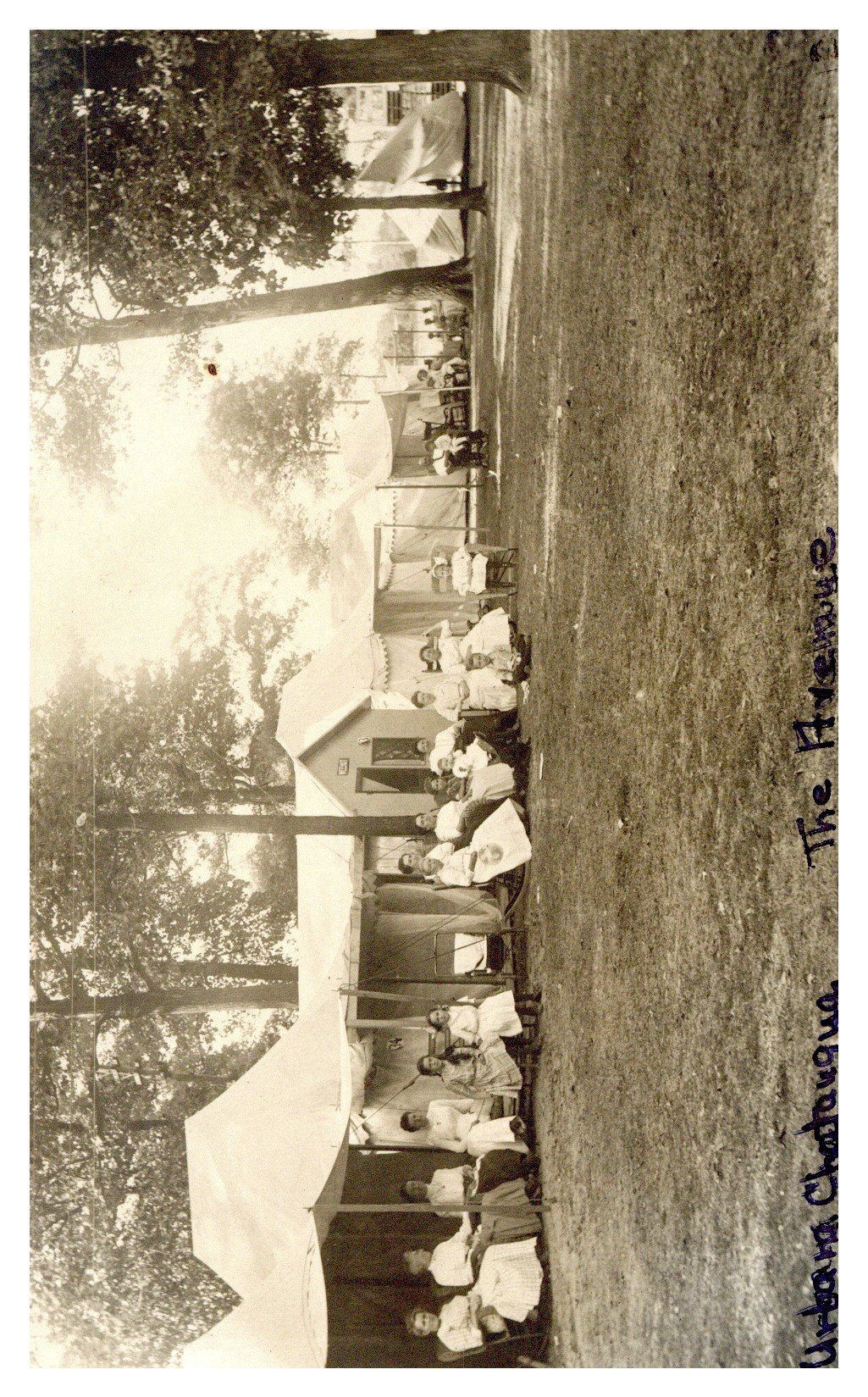
Chautauqua is part of a broader movement of Protestant organizations in late nineteenth-century America that thought education should extend beyond formal institutions and into civic life. That same impulse runs through a string of later American projects driven by the urge to gather, including the Santa Fe Institute, Black Mountain College, Esalen, and, most recently, the TED Talk. Founded in 1874 by Methodist minister John Heyl Vincent and businessman Lewis Miller at Chautauqua Lake in western New York, Chautauqua drew people for lectures, music, religious instruction, and public debate.
These communities seem spontaneous but are often the result of tremendous will by their creators. Zuegel calls this the "cold start problem". The first Chautauqua community began as a temporary gathering in 1874 where everyone camped in tents, and as people returned year after year, a permanent town sprouted up. This, Zuegel describes, is a "ladder of commitment".
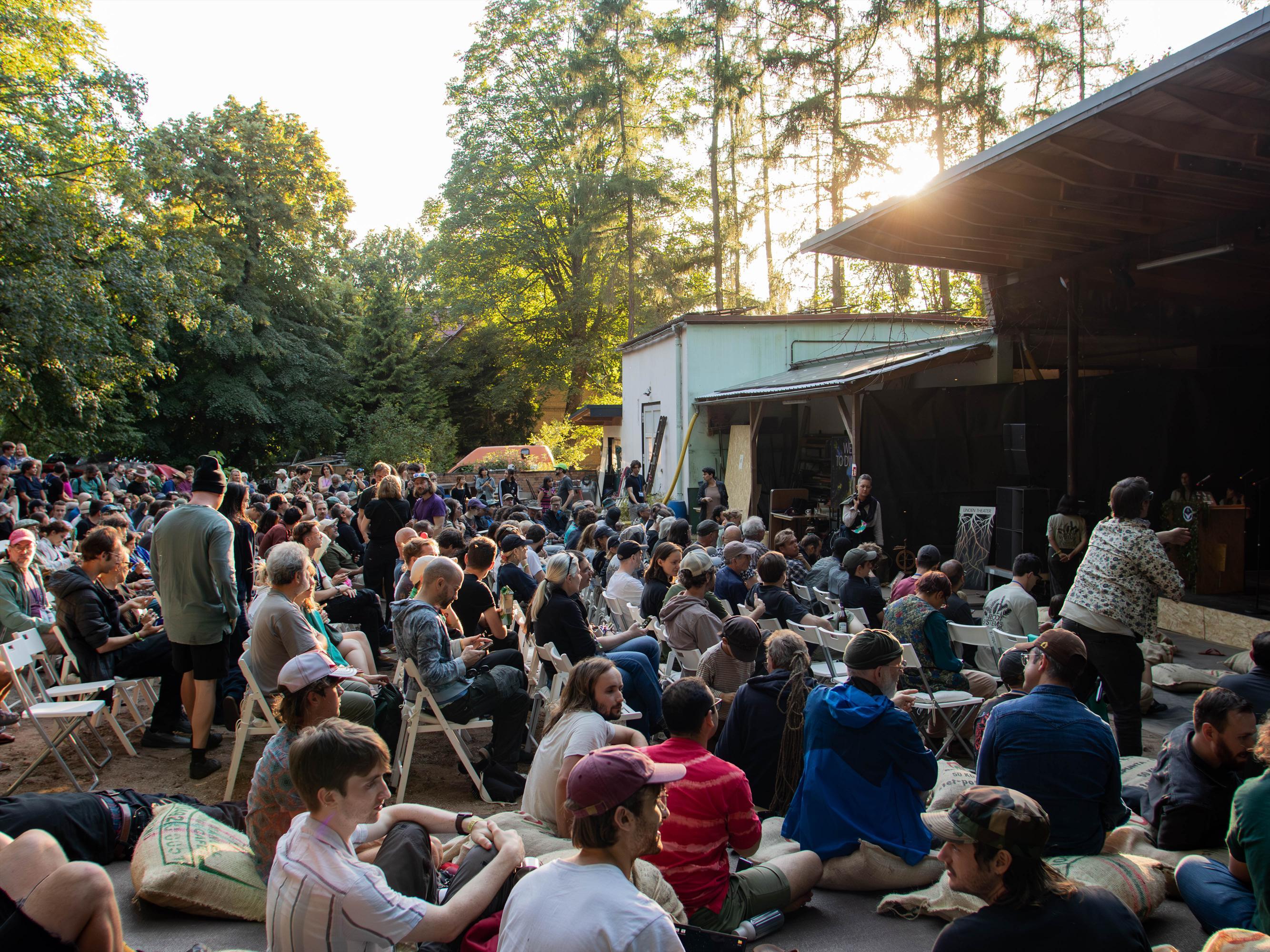
Two years ago, Esmeralda started its own pop-up called Edge Esmeralda. Each summer, about a thousand Esmeraldans meet for the entire month of June in a nearby northern Sonoma County town to discuss ideas (mostly AI). Zuegel speaks passionately about the potential, saying, "Imagine living on a college campus. You run into friends just walking to class, and everyone is learning and creating side by side together. Group dinners, creative projects, book clubs, and pickup sports happen spontaneously."
Like the walkable city that you, reader, are probably reading this from, it is the spontaneous possibility of action that creates opportunity. This idea is potent, and we are starved for it. Edge events have begun to pop up everywhere, like at the Gelephu Mindfulness City in Bhutan—a Special Administrative Region whose focus is GNH, or "Gross National Happiness", which embraces Bitcoin and operates under a law separate from the rest of Bhutan. Last summer, I rode my bike down to an old DDR camp outside of Berlin called Alte Hölle, "old hell" in German, for a sister event, called DWeb Camp. There, like-minded people gathered for four days to discuss ideas about the future. I came to complain, but ended up having a pleasant time. The weather was warm. We ate good meals and washed our own dishes, and I sat by the pool. It was a nice break from my life, which was beginning to feel chaotic and claustrophobic back on the asphalt. A few days later, I ran into some of the people I'd met there at an event for work, and found myself thinking about things I'd heard there about the future of technology.
Utopias, we know, are a way to avoid coming to grips with the real difficulties of a given society. But their fantasy also points to a need, one that is not being met. When I was younger and more afraid, I would have suggested we try to stop her. But it's a lonely life, as we all know, and you can't blame a girl for trying.